Beyond Trees: How ECOTRUST is Turning Conservation into Livelihoods in Uganda's Refugee-Hosting Communities
LAMWO DISTRICT — In the dusty villages surrounding Palabek Refugee Settlement, where the demand for firewood, farmland and construction materials continues to put pressure on fragile ecosystems,a quiet transformation is taking root.
Across homesteads in Palabek Nyimur, Palabek Kal, Aceba and Agora sub-counties, farmers are planting trees, rearing livestock, keeping bees and exploring new income-generating enterprises in a bid to secure their futures while restoring the environment.
For years, communities in northern Uganda's refugee-hosting districts have found themselves on the frontlines of climate change, environmental degradation and poverty. The arrival of thousands of refugees fleeing conflict in neighbouring countries increased pressure on already stretched natural resources, accelerating deforestation and land degradation in some areas.
Today, however, a new approach is seeking to change that narrative.
At the centre of this effort is the Intensive Mixed-Use Agroforestry Systems on Household Plots (MAS) Project, an initiative under the Government of Uganda's Investing in Forests and Protected Areas for Climate-Smart Development (IFPA-CD) Project.
Funded by the World Bank through the International Development Association's Refugee Sub-Window, the project aims to improve the sustainable management of forests and protected areas while increasing the economic benefits communities derive from the environment.
Unlike traditional tree-planting campaigns that often struggle to survive beyond donor funding cycles, the MAS project recognizes a fundamental reality: communities will only conserve forests if conservation improves their livelihoods.
As a result, the project goes beyond simply planting trees.
It integrates trees, crops and livestock on the same piece of land, creating climate-smart farming systems capable of restoring degraded landscapes while improving household incomes, food security and resilience to climate shocks.
The project is being implemented across 19 districts in Northern and Western Uganda, targeting refugee-hosting communities and villages located within five kilometres of refugee settlements.
The Environmental Conservation Trust of Uganda (ECOTRUST) is implementing the project in five districts, while Catholic Relief Services (CRS) and the International Centre for Research in Agroforestry (ICRAF) oversee implementation in the remaining districts.
Although the project officially runs from early 2025 to June 2026, implementers insist that the impact is intended to last far beyond the project's lifespan.
According to ECOTRUST officials, beneficiaries will continue receiving technical support after the project's closure through the organization's Trees Grow Back initiative, ensuring that the thousands of trees planted survive and mature into long-term environmental and economic assets.
For many communities living near forests, environmental conservation has often been viewed as a sacrifice.
Trees take years to mature, while daily household needs demand immediate income.
This challenge has historically undermined many conservation projects.
The MAS project seeks to bridge that gap by linking environmental restoration directly to economic opportunity.
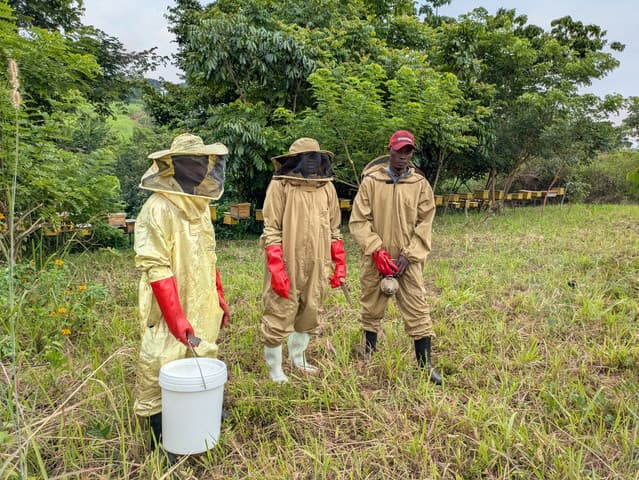
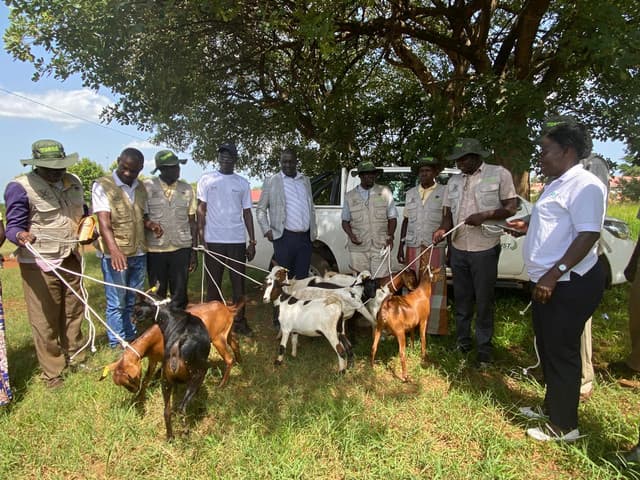
Selected "model farmers" are receiving support to establish diversified enterprises including goat rearing, beekeeping, honey production and shea nut processing.
The strategy is designed to provide households with alternative income sources that reduce dependence on activities that contribute to forest degradation, such as charcoal burning and unsustainable harvesting of natural resources.
"The selected model farmers are our pioneers.We hope to work with them as they improve their livelihoods and inspire others within their communities. This initiative enables farmers to earn income while actively conserving the environment," says Lamwaka Grace, ECOTRUST's Project Coordinator in Lamwo District.
To strengthen this incentive structure, model farmers have been provided with goats, which serve both as an immediate livelihood asset and a reward for their commitment to environmental restoration.
Among the project's beneficiaries is Alice Achan, a farmer from Agora Sub-county whose land is gradually transforming into a model agroforestry farm.
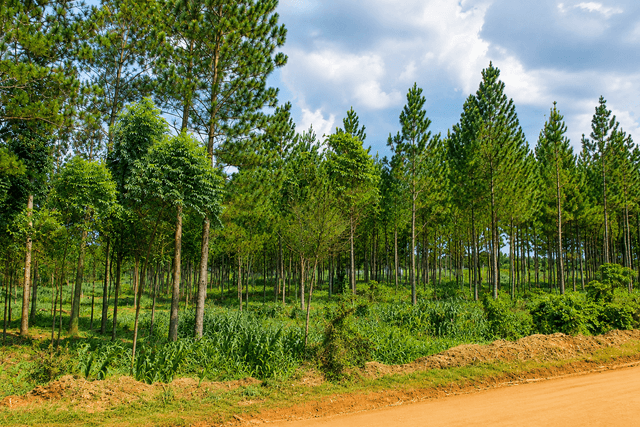
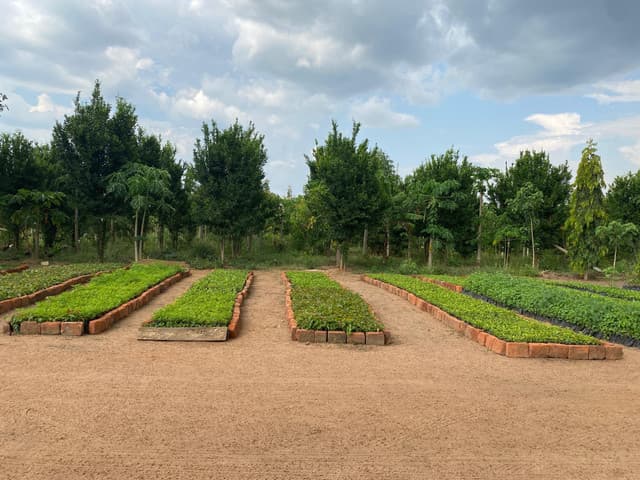
Working with ECOTRUST, Achan has planted more than 1,760 trees, including indigenous white teak and several fruit tree varieties.
What began as a tree-planting exercise is now becoming a pathway toward economic independence.
"When these animals grow and multiply, I will sell them to pay school fees for my children and take care of my family," Achan says.
"I will also be able to reinvest the money into my farming activities and improve our lives."
Her story reflects a broader shift taking place across the project area.
Rather than viewing trees solely as environmental assets, farmers are increasingly seeing them as part of a diversified livelihood system capable of generating income, improving soil fertility, providing food and protecting farms from climate extremes.
Women at the Centre of Change
One of the defining features of the IFPA-CD project is its emphasis on gender equality and social inclusion.
In many rural communities, women perform the majority of agricultural work yet often have limited access to productive resources and decision-making opportunities.
Project implementers believe sustainable development cannot be achieved without deliberately addressing these inequalities.
According to Odong Cosmos, the Assistant District Veterinary Officer in Lamwo, empowering women is essential for both household welfare and broader economic transformation.
"Gender sensitivity in this project is crucial," he explains.
"In many communities, women carry a significant share of the workload. Increasing their participation ensures they directly benefit from development initiatives and improve the welfare of their families."
By prioritizing women among project beneficiaries and supporting their participation in income-generating enterprises, the initiative seeks to ensure that the benefits of environmental restoration are shared more equitably.
Building Resilience in Refugee-Hosting Landscapes
The project's significance extends beyond individual households.
Northern Uganda hosts some of Africa's largest refugee populations, creating immense pressure on forests and other natural resources.
The demand for fuelwood, timber, farmland and settlement space has contributed to widespread environmental degradation in several refugee-hosting districts.
Against this backdrop, the MAS project represents an attempt to address two interconnected challenges simultaneously: environmental degradation and rural poverty.
By increasing tree cover on private and customary land outside protected areas, the initiative contributes to landscape restoration while reducing pressure on natural forests.
At the same time, diversified livelihood opportunities help communities build resilience against climate-related shocks such as droughts, erratic rainfall and declining agricultural productivity.
Beyond a Project
Local leaders believe the initiative's greatest achievement may be its ability to change mindsets.
For decades, environmental conservation and economic development have often been presented as competing priorities.
The experience emerging from Lamwo suggests the two can work hand in hand.
"We have worked closely with ECOTRUST on environmental protection and livelihood improvement through several initiatives.Even when this specific project comes to an end, I am confident ECOTRUST will continue supporting and monitoring farmers in this region," says Justine Peace Odur, the Chairperson LCIV of Lamwo District.
That confidence stems from ECOTRUST's longstanding presence in landscape restoration and community development.
For project beneficiaries, the relationship extends beyond the planting season and beyond the project's official end date.
As young trees take root across farms and livestock numbers begin to grow, many households are already looking toward a future where environmental conservation is no longer viewed as a burden but as a source of opportunity.
In a region grappling with climate change, environmental degradation and growing demand for natural resources, the success of such initiatives may ultimately depend on a simple principle: conservation works best when it improves people's lives.