Bugoma’s Hope: UWA Takes Over Forest Ravaged by Years of Destruction
For years, Bugoma Central Forest Reserve has bled silently.
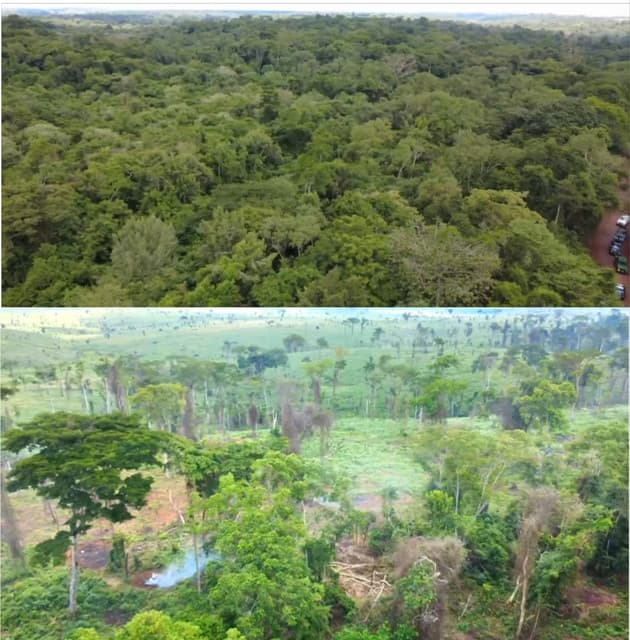
Ancient tropical trees have fallen to chainsaws. Charcoal kilns have mushroomed deep inside once-impenetrable natural forest. Vast stretches of indigenous vegetation have disappeared under sugarcane fields, food crops, and illegal settlements.
Chimpanzees and other wildlife have retreated deeper into shrinking habitats as conservationists, tourism players, and local communities watched one of Uganda’s most important ecosystems crumble under relentless human pressure.
But on Saturday, Bugoma entered what government officials and conservationists described as a decisive new chapter.
In a policy shift aimed at halting the destruction of the forest, the government officially handed over the management and protection of Bugoma Central Forest Reserve from the Ministry of Water and Environment and the National Forestry Authority (NFA) to the Ministry of Tourism, Wildlife and Antiquities, with the Uganda Wildlife Authority (UWA) taking direct control of protection and management operations.
The handover ceremony held at Kikuube District Headquarters followed a directive issued by President Yoweri Museveni ordering immediate intervention to stop continued degradation and encroachment inside the reserve.
Prime Minister Robinah Nabbanja, who presided over the handover after inspecting parts of the forest, painted a grim picture of the destruction inside Bugoma.
“Bugoma forest is very crucial to our ecosystem. You can see they left a small curtain of trees on the main road. Inside, there is no forest,” Nabbanja said.
“The destruction we have witnessed here is unacceptable.”
She directed UWA to immediately take over management and security of the forest and ordered the eviction of all encroachers without compensation.
“Whether you are small, medium, large, extra large, you will be evicted, and no one should enter the forest to reduce anything, not even a branch,” she warned.
In remarks that signaled government frustration over years of controversy surrounding the forest, Nabbanja also took direct aim at the long-running Hoima Sugar dispute.
“I don’t want to hear about Hoima Sugar. They have been looking for me but I don’t give them a chance. I don’t deal with corrupt people,” she said.
Tourism Minister Tom Butime described the takeover as a turning point in Uganda’s conservation efforts.
“From today, all encroachers, all intruders, all pretenders, big and small should get out of Bugoma forest,” Butime declared.
He said the forest would now be managed under a General Management Plan developed with stakeholders to ensure conservation while allowing sustainable utilization of resources by neighboring communities.
Nabbanja further directed the Ministry of Tourism, Wildlife, and Antiquities to expedite the process of upgrading Bugoma Forest into a national park, a move conservationists believe could significantly strengthen long-term protection and tourism development.
A forest Under Siege
Bugoma Central Forest Reserve, gazetted in 1932 and later expanded in 1965, 1968, and 1998, covers more than 410 square kilometers across Kikuube District in western Uganda.
The tropical rainforest is one of the most biodiverse ecosystems in the Albertine Rift and serves as a critical carbon sink, water catchment, and wildlife habitat.
The forest hosts over 257 tree and shrub species, including several Albertine Rift endemics and globally threatened species. It is home to more than 600 chimpanzees, grey-cheeked mangabeys, black-and-white colobus monkeys, blue monkeys, red-tailed monkeys, buffaloes, bush elephants and over 200 bird species.
Bugoma also supports rivers Nkuse and Rutoha that drain into Lake Albert, regulates rainfall and climate patterns, prevents soil erosion, and sustains livelihoods for surrounding communities.
Yet despite its ecological importance, the reserve has endured years of accelerated destruction.
Reports indicate Uganda has lost over 63 percent of its forest cover in the past two decades, with Bugoma emerging as one of the country’s most contested and degraded forests.
Figures from NFA show that by 2025, about 7,808 hectares had already been deforested, while current estimates for 2026 indicate an additional 4,084 hectares have been degraded
Inside Nsozi village in Kyangwali Sub-county, areas that were once thick and inaccessible rainforests have been reduced to bare ground.
Encroachers have been cultivating maize, sorghum, beans, and marijuana while engaging in charcoal burning and illegal timber harvesting.
During a recent tour, tourism stakeholders discovered fresh tree cutting and logs prepared for charcoal burning despite earlier government directives ordering protection of the forest.
On the very first day of UWA’s deployment, two people were arrested for illegal logging and charcoal burning, while a lorry transporting charcoal was impounded.

The Resident District Commissioner for Kikuube, Godwin Angalia, welcomed the takeover, saying previous efforts to protect the forest had not yielded enough results.
“We had several meetings aimed at protecting and preserving the forest, but we have not achieved much, and I am happy that UWA is coming to take over its security,” Angalia said.
He added that all people who illegally entered the forest should be arrested and prosecuted.
UWA Executive Director James Musinguzi said the agency would immediately deploy enforcement teams to stop further encroachment.
“As it is a directive from the President of Uganda, we are going to do an immediate deployment to prevent encroachment and also do stakeholder engagements, especially with the community and local leaders,” Musinguzi said.
He said restoration assessments would begin immediately to determine the extent of degradation and guide rehabilitation efforts.
UWA Board Chairperson Prof. James Kalema, who led the agency’s top management team during the reconnoiter visit at Kisindi Forest Station before the handover, described the reserve as a critical ecosystem whose ecological integrity must be restored urgently.
The Hoima Sugar Controversy
At the center of Bugoma’s destruction has been the controversial allocation of approximately 5,500 hectares of forest land linked to Hoima Sugar Limited, a subsidiary of the Rai Holdings Group.
The dispute has triggered years of court battles, protests, and fierce criticism from environmental activists.
NFA unsuccessfully challenged the allocation in court between 2019 and 2021, arguing that the land formed part of the protected forest reserve. Courts later upheld the legality of the lease agreement involving the Bunyoro Kingdom and Hoima Sugar.
Although recent efforts have focused on boundary demarcation between plantation land and protected forest, environmentalists argue that the damage has already been severe and irreversible in some sections.
As of early 2026, surveyors from the Ministry of Lands alongside NFA and Hoima Sugar had begun fresh demarcation exercises aimed at separating plantation land from protected forest following orders to restore degraded sections.
Tensions Have Remained High.
In March this year, conservationists and tourism stakeholders staged peaceful demonstrations demanding reopening and proper marking of Bugoma Forest boundaries to stop further encroachment.
At least 21 people, including local leaders and tour guides, were arrested during the protests.
Conservation groups accuse some actors of uprooting original boundary pillars and relocating them deeper inside the forest to facilitate land grabbing.
The Association for Conservation of Bugoma Forest (ACBF), which has spearheaded the Save Bugoma Forest campaign since 2019, described Saturday’s handover as a historic conservation victory after years of activism.
“Today 9th May 2026 will be remembered like the day when conservation made history in Uganda in contemporary time,” the association said in a statement.
“After approximately 12,000 hectares of forest were lost, what was only a dream for dreamers became a reality.”
The group said Bugoma should now evolve into a major ecotourism hub for chimpanzee trekking and Uganda mangabey tracking instead of sugarcane expansion.
“We believe that it is now time for them to vacate, to go planting sugar cane and maize elsewhere and for Bugoma Forest to be the hub of ecotourism activities,” the association noted.
The conservationists also paid tribute to the late Kikuube District LC5 Chairperson Peter Banura for supporting efforts to protect the forest.
Security, Tourism and Global Attention
The crisis in Bugoma has increasingly drawn national and international concern.
In a letter dated February 23, 2026, President Museveni ordered the eviction of all encroachers and directed UWA to assume protection of the forest.
The President also instructed Chief of Defence Forces Gen. Muhoozi Kainerugaba to investigate senior army officers accused of illegal activities inside the reserve.
The directive followed complaints by Tourism Minister Tom Butime over widespread degradation, deforestation and illegal encroachment in the reserve.
Last year, the National Anti-Wildlife Crime Coordination Task Force, supported by the United Nations Office on Drugs and Crime (UNODC), warned that continued destruction of Bugoma posed both environmental and national security risks.
The task force revealed that thousands of hectares had been encroached upon through illegal logging, charcoal burning and cultivation.
Officials warned that continued neglect of the forest could create conditions vulnerable to infiltration by armed criminal groups.
Among the resolutions adopted were cancellation of illegal land titles, reopening and proper demarcation of forest boundaries, stronger law enforcement deployment and accelerated handling of forest-related court cases.
The task force also resolved to engage the Bunyoro-Kitara Kingdom and Hoima Sugar Limited on sustainable coexistence while including the Attorney General’s Chambers, Ministry of Lands, Housing and Urban Development and the Judiciary as focal institutions in forest protection efforts.
The United Nations Office on Drugs and Crime acknowledged that Uganda currently has 506 Central Forest Reserves and 191 Local Forest Reserves contributing significantly to the national economy and environmental stability.
Conservationists argue that the future of Bugoma goes far beyond trees.
The forest represents one of Uganda’s remaining biodiversity strongholds and a potential tourism goldmine capable of generating jobs, attracting international visitors and supporting local economies through ecotourism.
Bugoma is increasingly viewed as an important destination for chimpanzee trekking, birding, primate tracking and nature-based tourism within the Albertine Rift tourism circuit.
For communities surrounding the reserve, Bugoma remains a vital source of rainfall regulation, water security and climate stability in an era of worsening environmental change.
The challenge now lies in whether UWA can succeed where previous protection efforts struggled.
Years of political interference, corruption allegations, contested land claims and weak enforcement have left deep scars on the forest.
But as armed patrols begin operations and restoration plans take shape, many conservationists believe Bugoma may finally have its strongest chance yet at survival.
For now, Uganda’s battle for one of its most important forests has entered a new phase. A phase defined not by promises but by whether protection on paper can translate into protection on the ground.