Every Tuesday and Friday, a familiar sound echoes through a household in northern Uganda: the tuning of a radio dial, followed by the distinctive broadcast of Farmer's Voice Radio (FVR) on Tembo FM.
For Aciro Stella, this is no mere background noise to her chores it is an essential appointment. As deputy chairperson and women's representative of the Mar-Lonyo Group, a radio listener group in Lamwo district, Stella has turned her radio set into a powerful tool for community development and financial independence. Each month, she meets with fellow members to discuss what they've learned, and she doesn't stop there — she rallies her family, neighbors, and friends to tune in too, creating a ripple effect of knowledge across her village.
From chaotic plots to organized fields
Before discovering the program, Stella farmed the way many in her region did: without much method. Maize and sorghum were planted together in the same hole, a crowded technique that stifled growth, depleted soil nutrients, and left her with disappointing yields season after season.
The airwaves changed that. Through FVR's programming on sustainable land management and agronomy, Stella learned proper spacing, row planting, and systematic crop management. What had been a disorganized garden became an organized, high-yielding one.
The power of value addition
The real turning point came when the program introduced the idea of value addition. Like many smallholder farmers, Stella had always sold her raw groundnut harvest immediately after digging it up — right when market gluts drove prices to their lowest. FVR challenged that habit, encouraging listeners to process their raw produce for a premium instead.
Stella began grinding her groundnuts into a rich, high-quality paste before taking it to market. The effect on her income was immediate: in a single season, she earned over one million Ugandan shillings in net profit. For a rural smallholder, that kind of money changes a household's trajectory. It meant reliable food on the table, the means to afford proper medical care, and school fees paid on time.
Building on the gains
Higher income called for smarter management, and Stella took FVR's financial literacy segments to heart. Rather than keeping her profits at home or spending impulsively, she started saving formally through a bank, building a financial cushion for her family.
She also embraced diversification. Instead of depending on groundnuts alone, she reinvested part of her profits into coffee farming, a long-term cash crop that promises to stabilize her income for years to come.
A shift in who gets a say
Beyond the numbers, Stella's story reflects a deeper change in her community: how decisions get made, and by whom. Rural women, she notes, were historically left out of financial and agricultural decisions. She believes knowledge has been the great equalizer.
"Now women take part in decision-making in their families," Stella says. "This is because they get knowledge on things like sustainable land management and how to properly grow crops, which makes them able to contribute to the family by providing this valuable knowledge that produces tangible results."
By bringing evidence-based solutions to the table solutions that visibly produce more food and higher income — women in her community have gained new respect and bargaining power at home.
Strength in numbers
The program's advocacy for collective action is also reshaping how the Mar-Lonyo Group does business. Members are moving toward bulk marketing and collective farming, a shift born from a simple truth: individual smallholders, selling in small volumes with limited transport, are easy for middlemen to exploit. By pooling their produce, the group can bypass exploitative brokers, negotiate directly with larger buyers, and command fairer prices.
Planting for the future
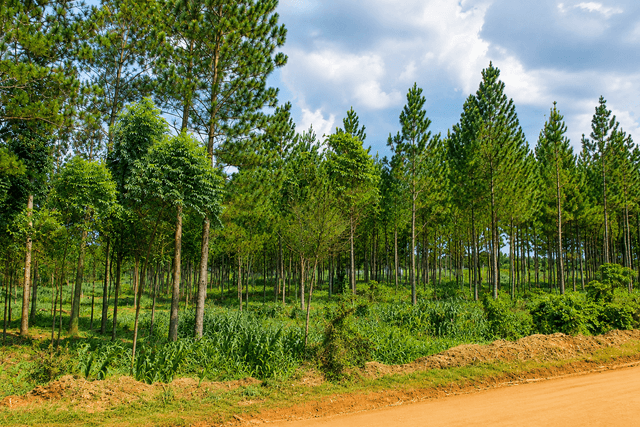
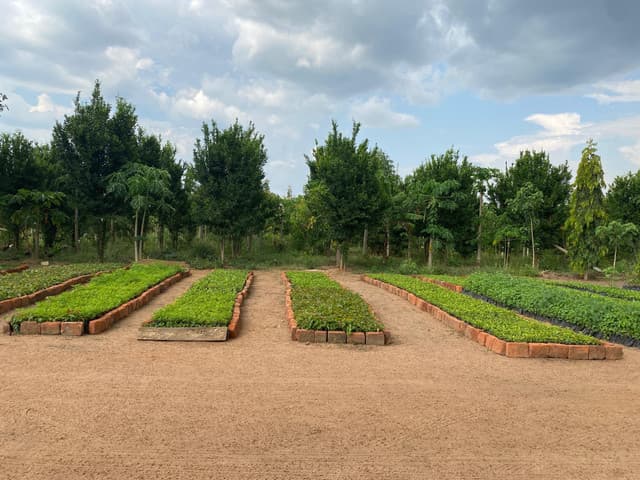
Stella has also taken up FVR's environmental and forestry lessons, launching an ambitious tree-planting effort aimed at building long-term climate resilience. She has since established a woodlot of 3,465 trees under the Transformative Approach to Sustainable Landscapes and Livelihoods (TASLL) Project, a Northern Uganda initiative promoting native tree planting, backed by UK International Development and ECOTRUST.
Her species selection balances ecological value with everyday utility: indigenous trees like Milicia excelsa (Muvule), Markhamia (Musambya), and Khaya grandifoliola (Tido), alongside fruit trees like jackfruit that provide both nutrition and seasonal income.
Stella sees the woodlot as a long-term investment. As the trees mature, she'll harvest poles and timber for sale a substantial future windfall while the trees also provide a steady, closer-to-home source of firewood.
Aciro Stella's journey, from a disorganized garden to a thriving, diversified agribusiness, is a testament to what accessible extension services can do. Through Farmer's Voice Radio, an ordinary radio set has become a catalyst for economic independence, environmental stewardship, and the empowerment of women across her community.