How CABI is Preparing Ugandan Farmers for Global Trade
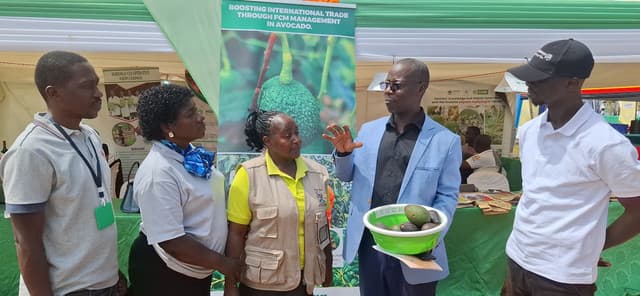
JINJA – The Centre for Agriculture and Biosciences International (CABI) used the 32nd National Agricultural Show to demonstrate that improving market access begins long before produce reaches an exporter, with investments in farmer knowledge, crop health and internationally accepted production practices.
While many visitors were drawn by demonstrations of pest traps and biological control technologies, CABI's broader message focused on helping farmers understand the full value chain required to access premium export markets.
As implementation of the European Union-funded Sanitary and Phytosanitary (SPS) Uganda Project continues, CABI is supporting farmers and exporters to reduce crop losses, improve food safety and comply SPS standards required by international buyers.
At the exhibition, visitors learned about practical pest management approaches for priority export crops including mangoes, avocados, capsicum, tomatoes, garden eggs and okra.
CABI's Dr Caroline Nankinga said one of the project's priorities is helping producers compete in premium international markets.
"We are encouraging farmers and exporters to make sure they are GLOBAL G.A.P.-certified, so that they can access premium markets," she said.
CABI also highlighted its ongoing call for applications for GLOBAL G.A.P. certification support under the EU-funded SPS Uganda Project, an initiative aimed at helping producers meet internationally recognised production and food safety standards.
The organisation demonstrated digital advisory tools that provide farmers with real-time information on pest outbreaks, diseases, weather forecasts and safe pesticide use, enabling quicker and more informed farming decisions.
Visitors also interacted with Plant Doctors under the Plantwise programme, who diagnosed crop challenges and recommended science-based management options tailored to farmers' needs.
Beyond production, CABI promoted value addition by demonstrating opportunities to process pineapples into wine and improve the market value of Rubanga coffee, encouraging farmers to earn more from their harvests instead of selling raw produce.
Gilbert Tugumizamu, working with HortiFresh Fresh Fruits and Vegetables Association, said compliance with international standards begins at farm level.
"We work with exporters, farmers and the Ministry of Agriculture to ensure that what the farmers are growing and what the buyers want comply with the sanitary standards of the market," Tugumizamu said.
The Ministry of Agriculture Animal industry and Fisheries (MAAIF) says integrated pest management is also helping reduce unnecessary pesticide use.
"If we work through this project focusing on IPM area-wide pest management, it helps us to monitor population dynamics so farmers use chemicals only when needed," Emmanuel John Namasa, Agriculture Inspector in MAAIF's Department of Inspection and Certification said.
He added that the approach lowers pesticide residues and supports the creation of production areas with low pest prevalence, an important requirement for export markets.
With export markets becoming increasingly demanding on food safety, traceability and sustainability, improving farmers' knowledge is emerging as one of Uganda's strongest competitive advantages.
Initiatives that combine science, farmer training, digital advisory services and market linkages are expected to play an increasingly important role in expanding the country's horticultural exports.
The activities formed part of CABI's participation in the 32nd National Agricultural Show, held from 26 June to 5 July in Jinja, where agriculture, trade and innovation took centre stage.