Museveni Promises “No More Sleep” During Seventh Elective Term Swearing-In
By Admin
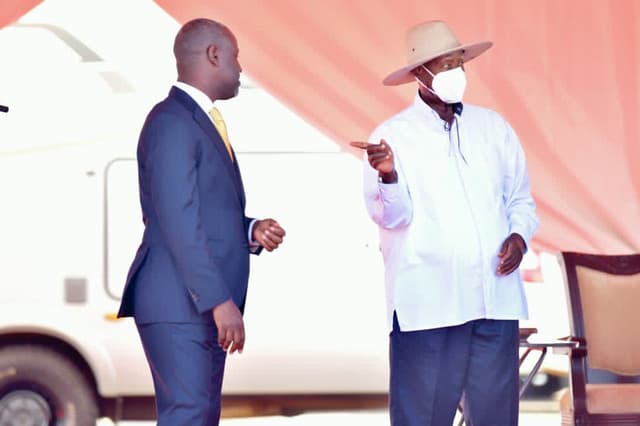
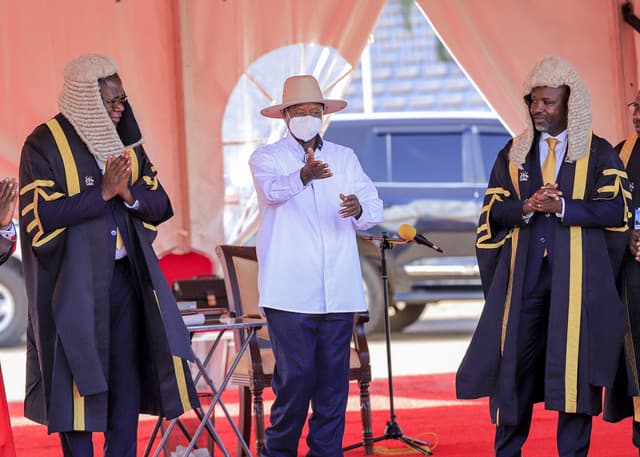
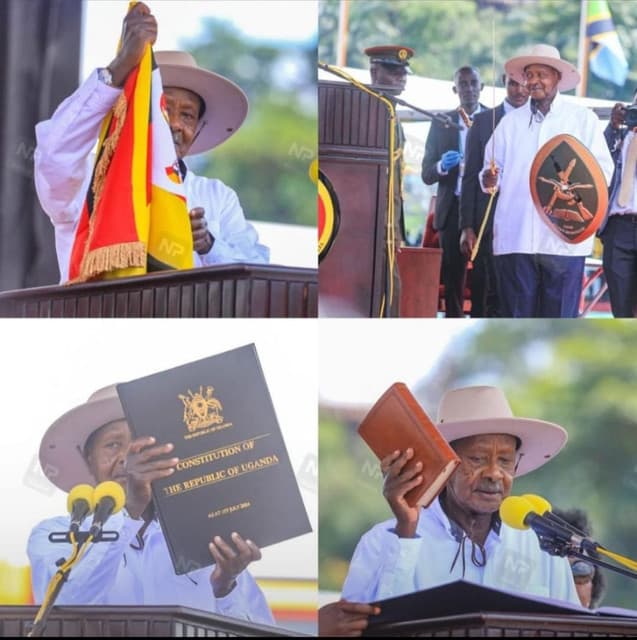
At his swearing-in and inauguration ceremony for a seventh elective term, at the Kololo Ceremonial Grounds, Yoweri Kaguta Tibuhaburwa Museveni promised a new phase of economic mobilization and wealth creation, declaring that Ugandans must “wake up” and fully utilize government programmes to fight poverty and unemployment.
Addressing visiting Heads of State, government officials and thousands of supporters, Museveni described the new term as a “Kisanja of no more sleep for all Ugandans,” saying the country had already laid a strong foundation through peace, infrastructure development and market expansion.
The President said the focus of his new administration would heavily center on wealth creation, job generation, value addition, and transforming more Ugandans from subsistence living into participants in the money economy.
“With all these contributions by the government, you must do your part in wealth creation and job creation,” Museveni said.
While briefly highlighting the NRM government’s achievements since 1986, Museveni pointed to improvements in roads, electricity, water supply, telecommunications, schools and health services, as well as rapid urban and real estate growth around Kampala and the Kampala-Entebbe corridor.
He also credited the NRM for restoring peace and stability, saying the country rejected sectarian politics and created an environment that allowed investment and economic activity to thrive.
However, despite these gains, Uganda continues to face persistent challenges including youth unemployment, low industrial absorption of labour, dependence on subsistence agriculture, underutilization of arable land, and the export of raw materials with limited value addition—issues the President’s new commitments aim to address.
Museveni pledged continued support for programmes such as the Parish Development Model (PDM), Emyooga, Operation Wealth Creation (OWC) and Uganda Development Bank financing, saying they are intended to provide affordable capital to ordinary Ugandans and help households transition into the money economy.
He urged citizens to actively participate in Parish SACCOs and monitor government funds to prevent misuse and corruption, a challenge he linked to inefficiencies that slow down service delivery at the grassroots.
“If the money is not enough, tell your MPs to work with me in Kampala to concentrate more money in PDM,” he said.
The President emphasized commercial agriculture as a major driver of jobs and household incomes, citing successful farmers from Kamuli, Serere, and Fort Portal as examples of how small-scale farming can generate significant earnings and employment opportunities.
This focus on agriculture, he noted, is intended to respond to rural poverty, land underutilization, and low productivity among smallholder farmers, which still trap many households in subsistence livelihoods.
According to Museveni, Uganda’s 40 million acres of arable land have the potential to create millions of jobs if properly utilized through intensive farming and value addition, addressing the challenge of unemployment among the rapidly growing youth population.
He argued that Uganda could create more than 100 million jobs through small-scale commercial agriculture alone if intensive farming models are widely adopted.
Museveni also said Uganda could eventually have more jobs than its local labor force can absorb, noting that even refugees living in Uganda would find employment opportunities if the economy fully expands.
He further committed his government to accelerating industrialization and processing of raw materials, arguing that Africa has remained economically weak because many countries continue exporting unprocessed products, which limits job creation and reduces national earnings.
This commitment, he said, is aimed at addressing Uganda’s balance-of-trade pressures, low export value, and limited industrial employment opportunities.
Using gold exports as an example, Museveni said exporting raw minerals denies Africans jobs, profits, and industrial growth opportunities.
“That is why here in Uganda, we banned the export of unprocessed minerals,” he said.
The President further pledged support for manufacturing, ICT, pharmaceuticals, vaccines, automobile production, and electronics industries aimed at creating both low-skilled and highly skilled jobs, addressing the skills gap and unemployment among graduates.
On education, Museveni said Uganda must shift towards practical and market-oriented training that equips learners with employable skills needed in the labour market instead of what he described as “random education,” which he linked to graduate unemployment.
He also linked Uganda’s future economic growth to regional and continental integration through the East African Community (EAC), COMESA and the African Continental Free Trade Area (AfCFTA), which he described as critical markets for Ugandan products and long-term strategic security.
Museveni additionally committed to environmental restoration and protection, calling for the preservation of wetlands and forests to support rainfall, irrigation systems, biodiversity conservation, and indigenous medicine.
He warned against continued rice and potato cultivation in wetlands, saying such activities must stop and be replaced with fish farming along swamp edges, which he described as more profitable and environmentally sustainable.
The President also promised continued investment in rural water access systems, including solar-powered water pumps and village wells, to support livestock farming, fish farming and household production, particularly in rural areas that still lack reliable water infrastructure.
Museveni concluded his address by thanking African leaders and international guests who attended the ceremony and called for peace, justice, and stronger economic cooperation across Africa.
The ceremony officially marked the beginning of Museveni’s seventh elective term following the 2026 general elections.