Visa Walls at Africa’s Biggest Tourism Show: Ugandan Traders and Tour Operators Cry Foul Over South Africa Delays
As Africa’s premier tourism trade show, Africa's Travel Indaba 2026, unfolds in the coastal city of Durban, Uganda’s tourism and business community says one of the continent’s biggest barriers to intra-African trade is once again taking center stage: visa restrictions.
While Uganda markets itself at the expo as the “Pearl of Africa,” several Ugandan tour operators, entrepreneurs, athletes, and creatives say they have been locked out of opportunities because of delayed or denied South African visas.
The concerns have triggered debate within Uganda’s tourism sector and reignited calls for African governments to ease movement across the continent if trade, tourism, and regional integration are to succeed.
Held from May 11 to 14 at the Inkosi Albert Luthuli International Convention Centre, Africa’s Travel Indaba is regarded as Africa’s leading inbound tourism trade show, attracting international buyers, investors, exhibitors, airlines, media, and tourism agencies from across the globe.
According to organizers, previous editions attracted nearly 10,000 delegates, over 1,300 exhibitors from 27 African countries, and more than 1,000 hosted buyers from key global markets.
Uganda is among the countries participating aggressively this year.
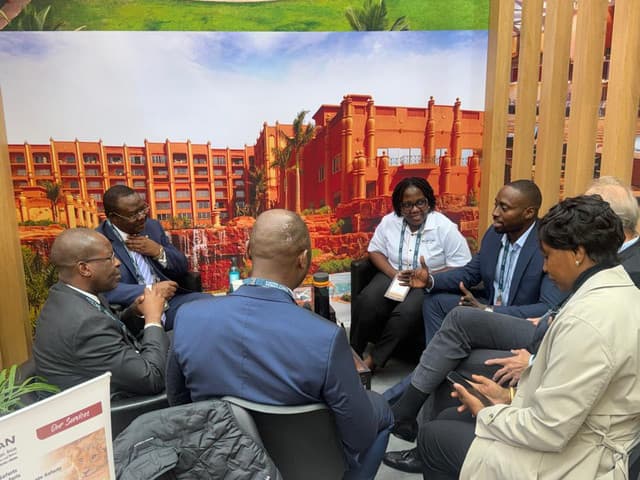
The Uganda Tourism Board says the country is using the expo to strengthen partnerships, increase destination visibility, secure itinerary placements, and engage international travel buyers.
“Uganda is live at Africa’s Travel Indaba Expo in Durban, engaging key trade partners and strengthening collaborations within the South African market,” UTB noted.
The Uganda Wildlife Authority is also participating in the expo under the leadership of board member Jane Bagonza to promote Uganda’s wildlife and conservation tourism products.
Yet behind Uganda’s colorful exhibition stands lies growing frustration from tourism stakeholders who say the continent’s vision of integration is being undermined by restrictive visa systems.
The Concerns Are Not New
During President Yoweri Museveni’s visit to South Africa in February 2023, him and his South African counterpart, President Cyril Ramaphosa, agreed to initiate discussions aimed at easing travel between the two countries.
This meant that if talks were successfully concluded and a bilateral agreement signed, Ugandans holding ordinary passports would travel to South Africa visa-free. Discussions between officials from both countries on a reciprocal visa fee exemption arrangement were had, according to Uganda’s Ministry of Internal Affairs.
In September 2023, private sector players attending the Uganda-South Africa Trade and Investment Summit at Speke Resort Munyonyo jointly called on both governments to remove visa barriers that were frustrating trade and investment between Uganda and South Africa.
At the time, Uganda’s exports to South Africa stood at less than 20 million dollars, while South African exports to Uganda were estimated at nearly 200 billion dollars, exposing a huge trade imbalance that business leaders partly attributed to limited market access and travel barriers for Ugandan entrepreneurs.
Uganda’s High Commissioner to South Africa, Paul Amolo, and South Africa’s envoy to Uganda, Luluana Xinghwana, acknowledged the concerns and promised discussions aimed at improving movement between the two countries.

A year later, in October 2024, the same concerns dominated discussions during the Maonyesho Africa Tourism Roadshow in Cape Town, where tourism stakeholders and tour operators from both countries again raised alarm over visa restrictions and lengthy processing timelines.
Karin Matodes, Uganda Airlines’ representative in South Africa and Director of Airline Pros, warned that despite growing tourism and business potential between the two countries, restrictive visa systems continued to slow progress and limit opportunities
At the same event, Uganda’s High Commission in South Africa, represented by Dennis Kalikola, revealed that discussions between Kampala and Pretoria were ongoing to explore the possibility of waiving visa requirements altogether
“Both sides recognize the impact, and while we’re optimistic about an agreement, it remains a work in progress,” Kalikola said at the time.
After many years of negotiations and nearly four years after the initial commitments began, tourism stakeholders say little has changed.
Visa delays persist. Restrictions remain intact. And promised discussions on scrapping visa requirements altogether appear to have stalled.
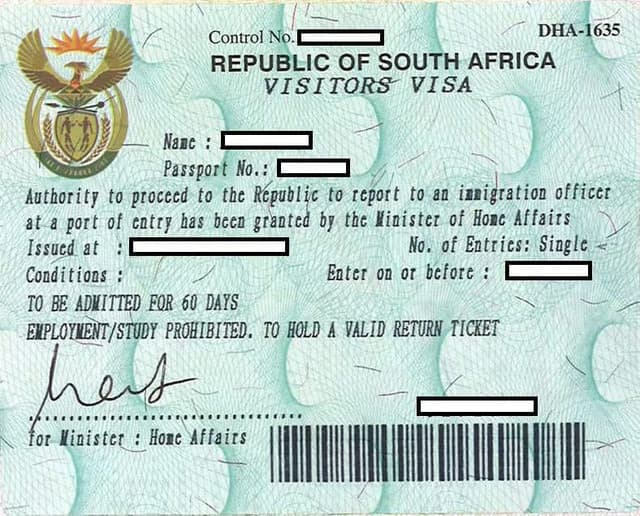
Tourism stakeholders say securing a South African visa remains a major hurdle for Ugandans, with processing periods stretching between 10 to and 18 days — and in many cases longer.
Several applicants claim they missed flights, exhibitions, sporting events, and networking opportunities in Durban, Johannesburg, and Cape Town, despite paying for accommodation, air tickets, exhibition stands, and visa applications.
Amos Wekesa, the CEO of Great Lakes Safaris and one of Uganda’s most prominent tour operators, says at least 15 Ugandan tour operators failed to secure visas in time for Indaba despite meeting all requirements.
“Indaba brings wholesalers from more than 50 countries. These are opportunities for our tour operators,” Wekesa said.
“If you deny or delay Ugandan business persons, you are tying their hands and telling them not to compete," Wekesa noted.
Wekesa argued that the restrictions are directly affecting Uganda’s ability to grow tourism revenues from South Africa.
“With the current situation, you can see why South Africa makes close to one billion dollars while Uganda makes around 48 million dollars from South Africa. It is entrepreneurs who make that difference,” he added.
He also criticized long queues and bureaucratic processes at the South African High Commission in Kampala, saying applicants sometimes spend up to four hours submitting documents.
The frustrations escalated online, especially on X (formerly Twitter) after claims emerged that passports belonging to Ugandan applicants had been locked inside an office at the South African High Commission in Kampala
According to Wekesa, a consular official identified as Modjadji Mahlangu allegedly held passports of Ugandans who had applied for visas, leaving travelers stranded as they prepared for the Two Oceans Marathon in South Africa.
Applicants reportedly had paid for flights and accommodation but were unable to travel because they could not retrieve their passports in time.
The incident caused outrage online, with calls for Uganda’s Ministry of Foreign Affairs to intervene and demand accountability.
Although Wekesa later confirmed that the passports were eventually returned, the controversy intensified criticism over how Ugandan travelers are treated during visa processing.
Entrepreneurs Missing International Markets
The impact extends beyond tourism operators.
Gerald Katabazi, a coffee entrepreneur and leader at Volcano Coffee, says visa delays caused him to miss one of the world’s key coffee exhibitions.
“In 2024, I missed the coffee exhibition because they held my passport. I received the visa after the exhibition had ended,” he shared.
Industry players argue that such delays are hurting exporters, small businesses, and startups trying to enter regional and international markets.
For many Ugandan businesses, South Africa serves as a gateway to larger continental and global trade networks.
Young Africans Blocked Mid-Journey
Even cultural and youth initiatives have not been spared.
A group of young skaters traveling across Africa from Kampala to Johannesburg say their dream journey nearly collapsed after their South African visa applications were denied.
The skaters had crossed multiple countries before reaching Botswana, where they were forced to fly back to process South African visas.
Their applications were ultimately rejected, threatening to end a journey they described as years in the making.
The group later appealed for intervention from both Ugandan and South African authorities.
South African visa restrictions and delays for Ugandans remain one of the least openly discussed issues between the two countries. Leaders rarely give direct answers publicly.
But behind the silence, many players believe it could be tied to migration concerns, abuse of visa systems, undocumented stays, asylum trends, and diplomatic policy decisions that governments prefer handling quietly rather than politically.
Africa’s Free Movement Vision Still Stuck
The growing frustrations also expose the slow implementation of Africa’s broader integration agenda.
The African Union (AU) launched the African Union Passport during the 27th AU Summit in Kigali, Rwanda, in July 2016 as part of Agenda 2063, a flagship continental blueprint aimed at promoting free movement, trade, and African integration.
The supporting Protocol on Free Movement of Persons was later adopted in January 2018 with the goal of eliminating restrictive immigration systems that make Africans “strangers on their own continent.”
Yet despite repeated political commitments, only a handful of African states have ratified the protocol, and visa regimes across the continent remain largely restrictive.
For many Ugandan entrepreneurs and tourism players, the South Africa visa experience has become a symbol of the gap between Africa’s integration rhetoric and the reality at border controls.
Diplomatic and Economic Questions
The growing frustration has sparked broader questions about reciprocity and regional diplomacy.
Some Ugandans are now calling for reciprocal visa restrictions on South African nationals, arguing that Ugandan entrepreneurs are unfairly disadvantaged despite South African companies operating freely in Uganda.
Policy analyst Moses Otai criticized Uganda’s foreign policy implementation, arguing that economic diplomacy is failing local entrepreneurs.
“Many businesses and entrepreneurs are on their own. South African companies enjoy privileges, and there must be reciprocity,” he said.
Others warned that negotiations often prioritize diplomatic passport holders while ordinary business people continue struggling to access markets.
The tensions emerge at a time when African leaders are increasingly calling for easier movement across borders under the vision of continental integration championed by the African Union and the African Continental Free Trade Area.
Museveni’s Warning
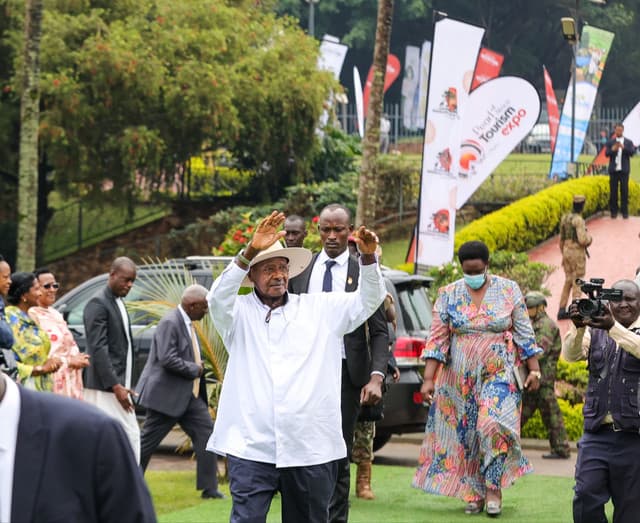
The debate gained additional political weight after Yoweri Kaguta Museveni criticized African visa restrictions while addressing invited heads of state and other dignitaries from across the world at Speke Resort Munyonyo ahead of his seventh elective term swearing-in ceremony.
“African governments should stop playing around with our people’s lives. Why should Africans need visas to cross borders? Visas should be for tourists,” Museveni said.
He added: “Africa has suffered so much because of that. There is no logic in asking Africans for visas to move across borders.”
His remarks echoed long-standing concerns from trade and tourism players who argue that Africa can not promote integration while simultaneously restricting the movement of business people, tourists, investors, athletes, artists, and entrepreneurs.
For Uganda, stakeholders say the consequences go beyond delayed travel.
Industry leaders argue that visa restrictions are costing the country export opportunities, tourism partnerships, investor confidence, and access to continental markets.
Tour operators say missing Indaba means losing direct access to global travel wholesalers who package and sell African destinations to international tourists.
Entrepreneurs say delayed visas mean missed exhibitions, canceled deals, and reduced competitiveness for Ugandan products such as coffee, crafts, hospitality services, and cultural experiences.
Analysts also warn that prolonged restrictions weaken Uganda’s tourism recovery and undermine efforts to position the country as a regional business and tourism hub.
For young innovators, creatives, athletes, and startups, the restrictions symbolize a continent where movement remains easier for foreign visitors than for Africans themselves.
Ironically, the visa frustrations are unfolding at an event specifically designed to strengthen African tourism partnerships.
Africa’s Travel Indaba positions itself as a platform that connects African tourism products to international buyers and global decision-makers.
The event promotes cross-border business relationships, investment, and travel growth.
But, stakeholders warn that restrictive travel systems risk undermining those ambitions.
Uganda aggressively markets gorilla tourism, wildlife safaris, culture, and adventure travel — South Africa remains a critical source market and strategic continental partner.
Industry players say if Africa is serious about boosting intra-African tourism and trade, easier movement must become a priority rather than a slogan.
As delegates continue networking inside Durban’s convention halls, many Ugandan entrepreneurs say the bigger conversation is no longer only about tourism marketing.
It is about whether Africa is truly open for Africans.